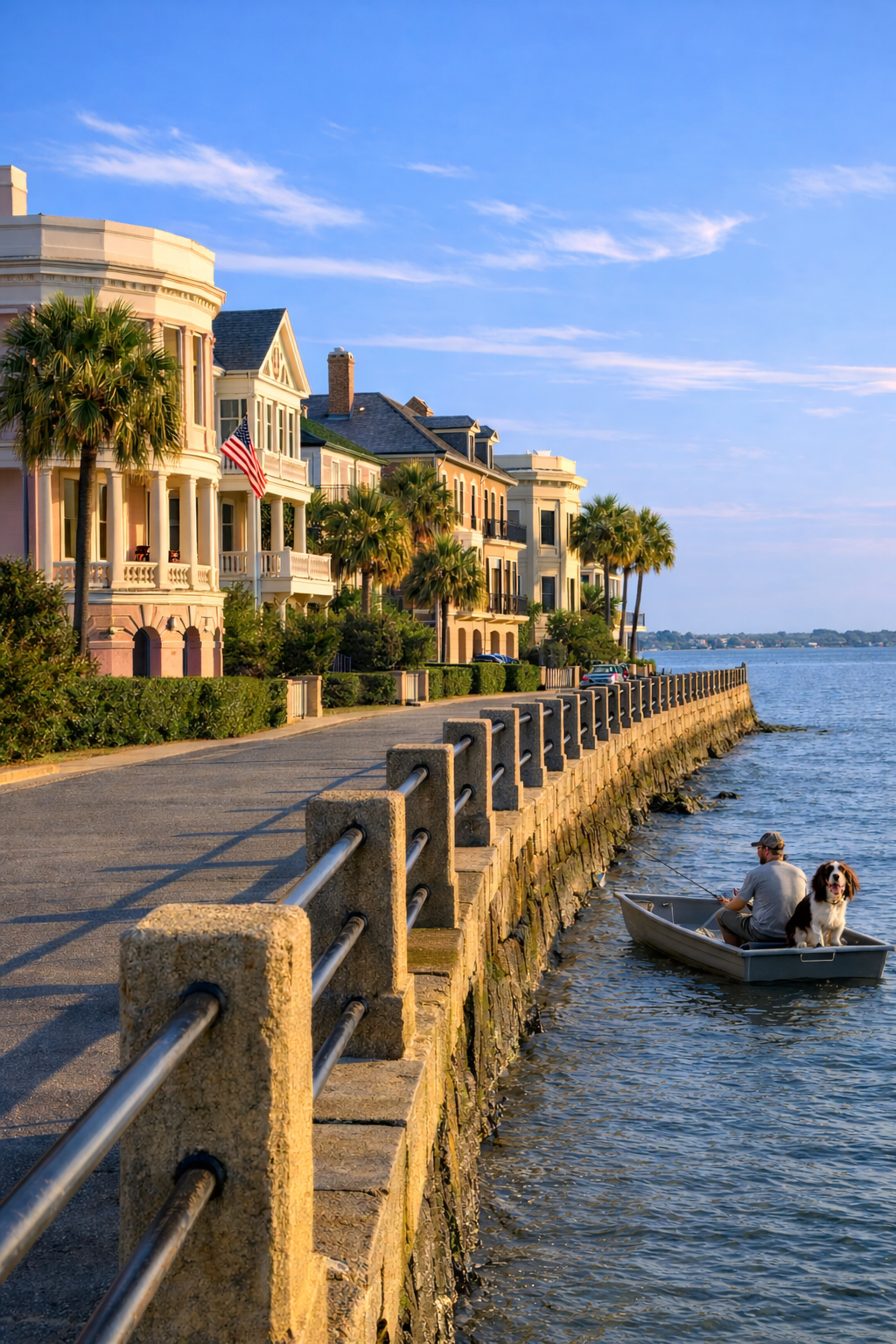
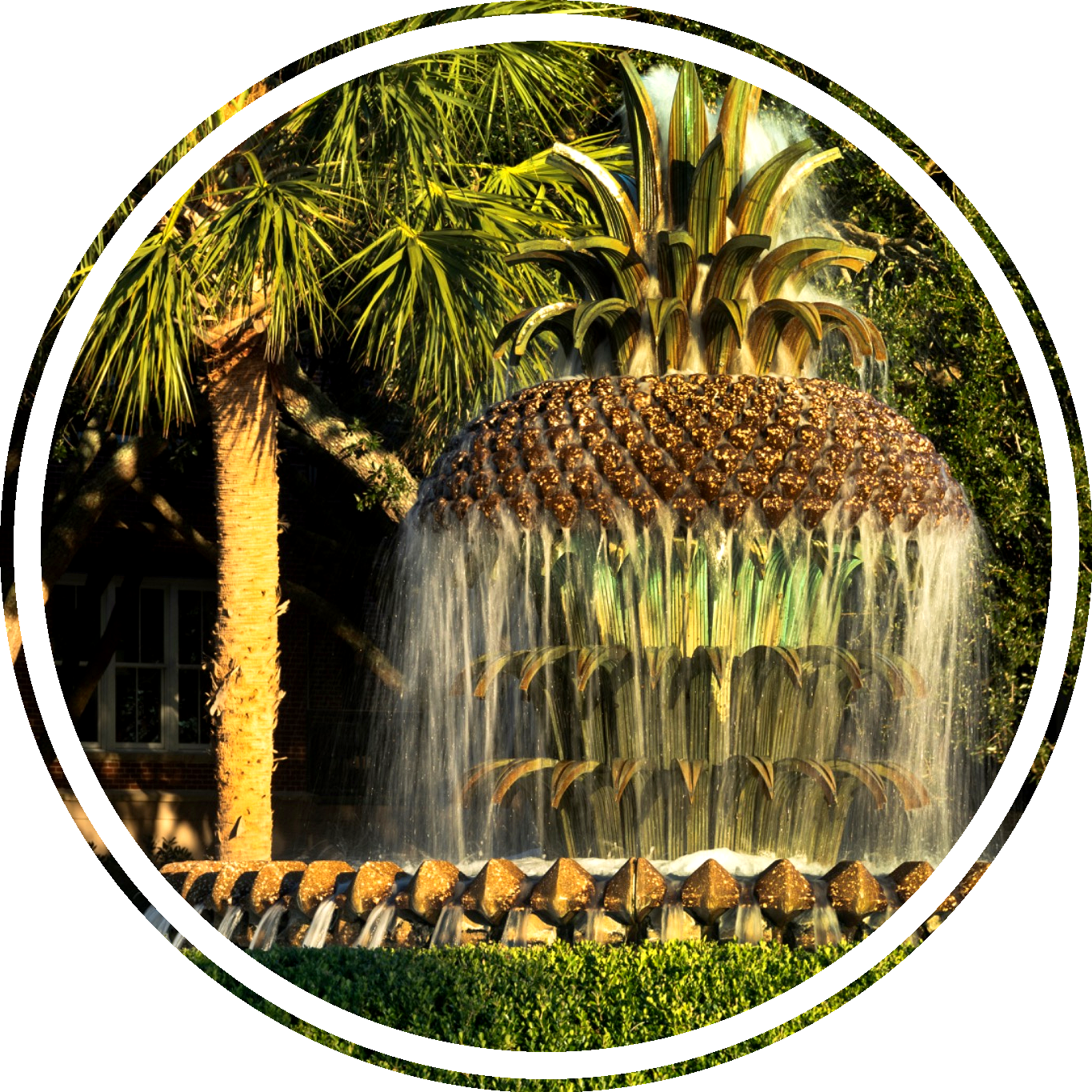
Looking for the best Charleston tours? This guide compares the top walking tours, ghost tours, carriage tours, harbor tours and historic experiences so you can quickly find what’s worth your time. Whether you want to explore the city’s cobblestone streets on foot, hear Charleston’s darker stories after sunset, ride in a horse-drawn carriage, or experience the harbor to view porpoises, Castle Pinckney, the Cooper River Bridge, Fort Sumter, Sullivan’s Island or Morris Island lighthouses, there are dozens of options—and not all are equal. This page breaks down the most popular Lowcountry tour types and what each one does best.
Charleston Overview
Cobblestone streets, pastel mansions, and layered coastal history make Charleston one of America’s most walkable and story-rich cities—a true goldmine for history, food, and saltwater experiences. A visit to this peninsula is among the most rewarding things to do along the Atlantic Coast. Nicknamed the Holy City, Charleston is known for its skyline of historic church steeples rising above the harborfront neighborhoods.
Charleston has long been shaped by dramatic turns of fortune. In 1886, a powerful earthquake struck the city, damaging much of its elegant architecture and permanently altering the streetscape. The disaster came after decades of rebuilding. Following the Civil War, Charleston spent nearly twenty years repairing buildings scarred by cannon fire, while many low-lying streets were raised eight to twelve feet to combat flooding.
Charleston’s history moves in waves—floods, hurricanes, wars, and earthquakes have repeatedly tested the city. Yet some landmarks endure. St. Michael’s Episcopal Church, built near the early fortified walls of the colonial town, has survived every major conflict and disaster since the eighteenth century.
Walk through the historic district today and you are seeing the result of all these layers of rebuilding. From Rainbow Row and the Battery to Charleston Harbor, guided tours explore preserved neighborhoods, Gullah Geechee cultural influence, waterfront landmarks, and Lowcountry traditions that continue to define one of the most distinctive coastal cities in the United States.
Explore Charleston
Charleston Tours – Walks In History
Historic streets, a slew of church steeples, pastel row houses, and layered stories of the Holy City’s colonial and antebellum past. Charleston tours on foot often move through the Historic District, where cobblestone streets and preserved homes reveal centuries of change shaped by trade, conflict, and rebuilding. Routes typically include areas around Broad Street, the Battery, and Rainbow Row, connecting architectural detail with the people and events that defined the city.
Many Charleston tours also extend beyond the peninsula into nearby communities such as Mount Pleasant and James Island, where additional historic sites and waterfront perspectives provide a broader understanding of the region. From churchyards and hidden alleys to harbor-facing promenades, these walking experiences offer a structured way to see Charleston as both a preserved historic city and a living coastal environment.
Historic & Cultural Charleston Tours
Tours exploring Charleston’s colonial past, Gullah Geechee culture, and the unique traditions that shaped the Lowcountry. Charleston tours in this category often highlight the cultural influences that extend beyond the city center, connecting the peninsula to surrounding areas such as Johns Island and James Island, where Gullah Geechee heritage remains an essential part of the region’s identity.
Guided experiences may include visits to historic homes, churches, and cultural landmarks, along with storytelling that reflects Charleston’s role in early American history, the transatlantic trade network, and the evolution of Southern culture. Many Charleston tours also incorporate Mount Pleasant and surrounding coastal communities, where maritime traditions and local life continue to shape the Lowcountry. These tours provide a deeper understanding of Charleston not just as a historic destination, but as a region defined by interconnected communities and enduring cultural influence.
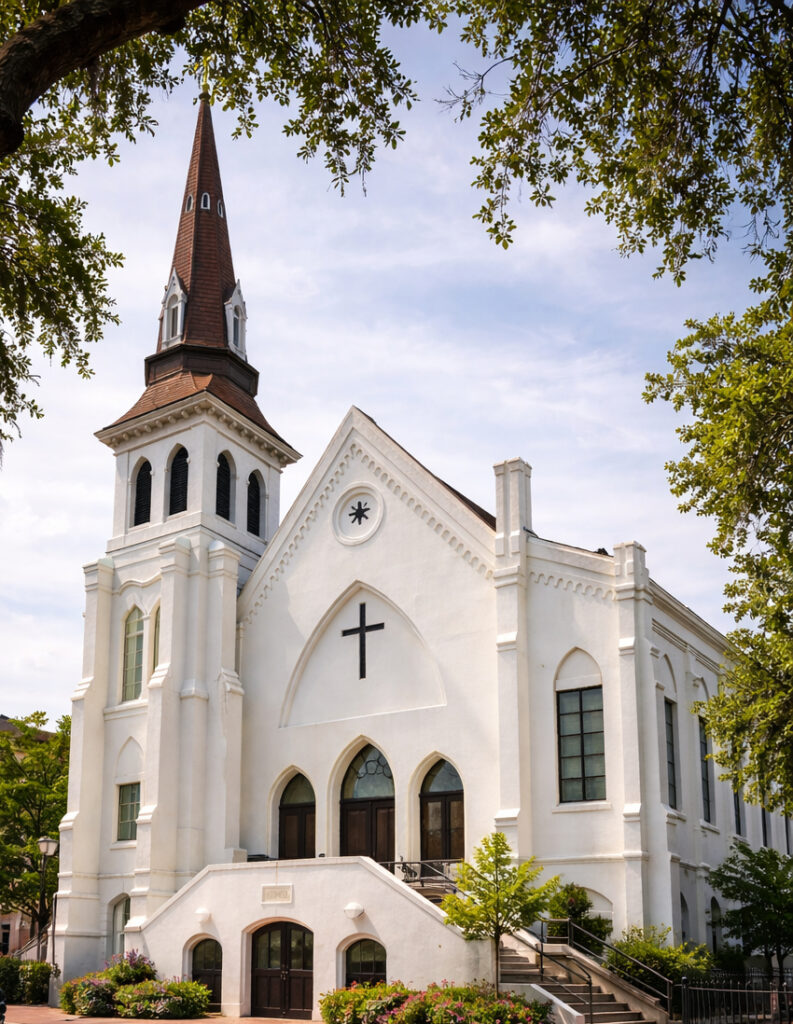
Charleston Harbor & Boat Tours
Water-based tours highlighting Charleston Harbor, historic forts, lighthouses, iconic bridges, and maritime history. Charleston tours on the water often explore the harbor’s central role in the city’s development, passing landmarks such as Fort Sumter, where the Civil War began, and Fort Moultrie on Sullivan’s Island, which played a key role in earlier coastal defenses.
Routes frequently extend beyond the harbor into surrounding waterways near Isle of Palms, Sullivan’s Island, and the Intracoastal routes toward Mount Pleasant, where shifting tides and marsh landscapes define the experience. Some Charleston tours also move north toward Bull’s Bay, a quieter and more remote coastal area known for wildlife, barrier islands, and protected estuaries. These excursions provide a broader view of the Lowcountry, where history, ecology, and open water are closely connected.
Food & Culinary Charleston Tours
Lowcountry cuisine, local flavors, farm-to-table restaurants, and guided tastings rooted in regional food traditions. Charleston tours focused on food often center around the peninsula, where historic dining rooms, neighborhood kitchens, and modern restaurants reflect generations of culinary influence. Dishes such as shrimp and grits, she-crab soup, and fresh seafood highlight the connection between Charleston and its surrounding waters.
Many Charleston tours also incorporate ingredients and traditions tied to nearby areas such as Johns Island, known for its agricultural roots, and Mount Pleasant, where access to local seafood remains central to the region’s identity. These culinary experiences connect food with place, offering insight into how Charleston’s coastal environment and cultural history continue to shape what’s on the table today.
Day Trips from Charleston
Guided trips to barrier islands, Lowcountry landscapes, and historic destinations beyond the Charleston peninsula. Charleston tours in this category often extend into surrounding coastal areas, including Sullivan’s Island and Isle of Palms, where wide beaches and oceanfront views provide a contrast to the historic city center.
Further excursions may include Kiawah Island, known for its preserved natural landscapes and maritime forests, as well as Johns Island, where rural roads, oak canopies, and agricultural land reflect a quieter side of the Lowcountry. Some Charleston tours also venture toward Bull’s Bay and protected coastal refuges, offering access to undeveloped shoreline and wildlife-rich environments. These day trips provide a broader perspective on the region, connecting Charleston to the network of islands and waterways that define this stretch of the Atlantic Coast.
Yoga in Charleston
Charleston relaxation can be a simple time in a hammock listening to the soft melodies of windchimes with an occasional distant foghorn. To reset with asanas, morning Charleston yoga classes often unfold beneath the shade of live oaks, while waterfront sessions take advantage of the Atlantic breeze drifting across the Sullivan’s Island or Folly Island side of the harbor. Whether you’re looking for a gentle stretch after exploring the historic district or a full vinyasa class near the beach, Charleston offers a surprisingly vibrant yoga community woven into its Carolina Lowcountry lifestyle.
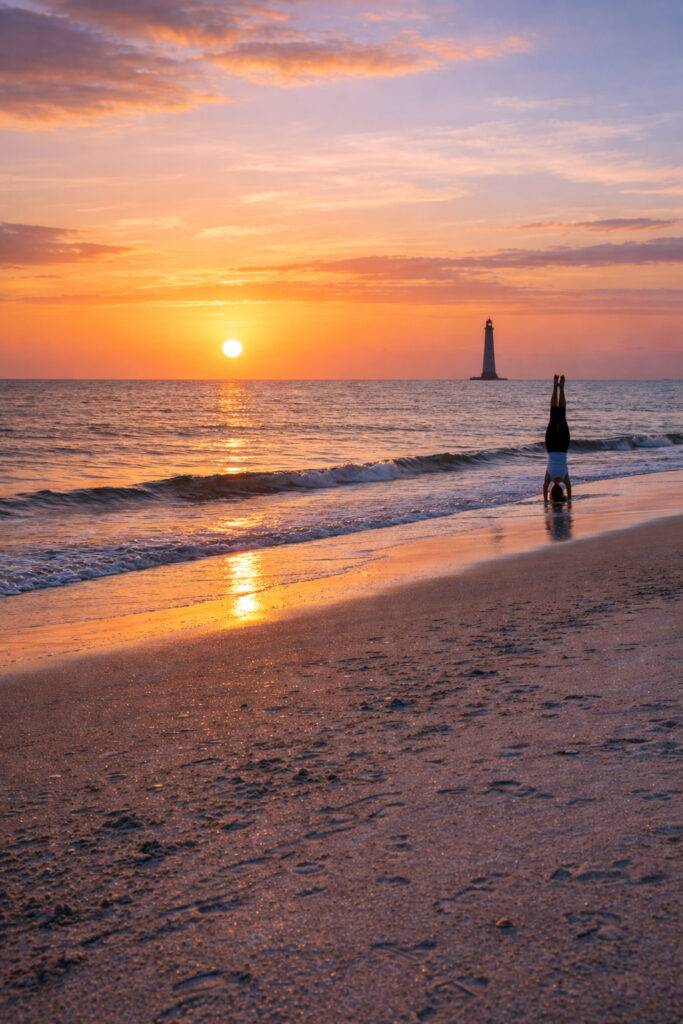
Nearby Atlantic Coast Destinations
Charleston is only one chapter of a much larger coastal story. Just north of the city, the wild barrier islands and tidal marshes of the Cape Romain National Wildlife Refuge protect quiet beaches, maritime forests, and some of the most important nesting grounds for sea turtles and migratory birds on the Atlantic seaboard.
Many travelers continue their Lowcountry journey south toward the historic waterfront of Beaufort, the oak-lined squares of Savannah, and the relaxed island communities of Hilton Head Island.
Heading north brings travelers to the lively boardwalk of Myrtle Beach, the riverfront charm of Wilmington, and the windswept dunes and lighthouses of the Outer Banks. To explore how these destinations connect along the coast, visit the Southeast Atlantic Coast section of Atlantic Coast Tours.
Discover the Southeast Coast
Charleston
The Citadel • IAAM • Rainbow Row
Savannah
Moss • Bonaventure • Artsy
Beaufort
Lowcountry • Waterfront • Prince of Tides
Hilton Head
Coligny Beach • Golf • Leisure
St. Simons
Lighthouse • Oaks • Island
Wilmington
Riverwalk • Cape Fear • Films
Outer Banks
Buxton • Wild Horses • Atlantic
Myrtle Beach
Boardwalk • Sunshine • SkyWheel
→
Explore Atlantic Coast Regions
New England • Mid-Atlantic • Southeast • Florida • Gulf Coast
© 2026 Atlantic Coast Tours. All rights reserved.